Management Competencies
The value of GIIM’s portfolio of high quality advanced digital management education programs is derived by focusing on integrating the appropriate leadership, management, industry, technical, business, and interpersonal skills essential for leveraging IT.
It is defined in terms of productivity, innovation, and improved performance at all levels of the organization (e.g., individual, department, functional area, company, clients/customers, external partners).
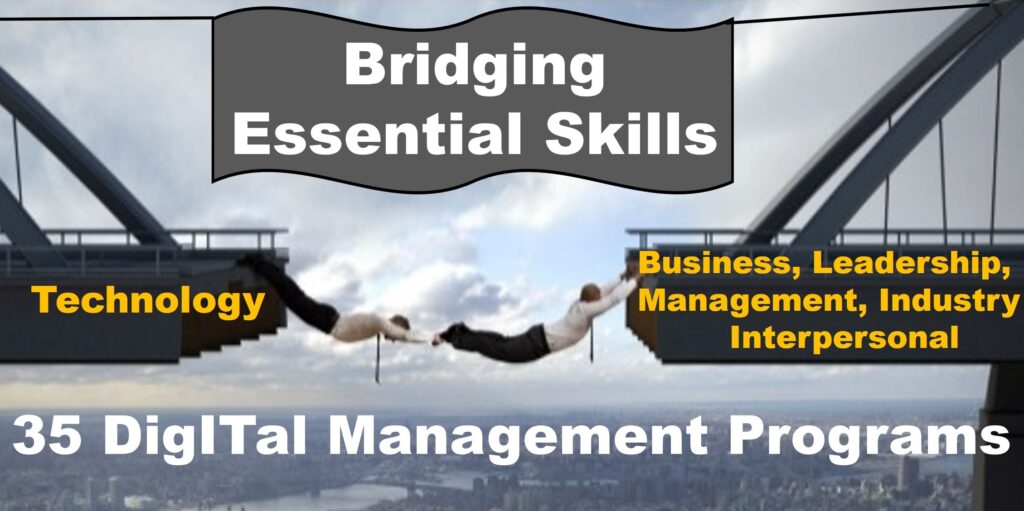
Hybrid Skills For The 21st Century
Broad General Skills
Business/Management
- Leadership
- Strategic Thinking
- Project Management
- Finance
- Industry
Interpersonal
- Communications
- Teams & Relationship
- Adaptability
- Morals/ Ethics
Deep Technical Skills
- SMAC
- Security
- Data/ IoT
- Programming
- SW Engineering
- IT Architecture
The above is achieved through the active application of the course content as well as opportunities to improve competencies such as:
Leadership skills
To become a leader, what have you done to inspire the people that you are associated with to want to listen to you?
Knowledge of the digital field
Attendees will obtain a broad knowledge of the current and emerging management and technical topics within the IS field that can be directly applied to their organization to leverage IT for competitive advantage, as every company becomes a digital company.
Management bench strength
The pool of qualified associates for management roles will increase as a result of the program. Individuals within the program will develop leadership skills as well as a broad understanding of IT management disciplines.
Strategic thinking
Introduction to innovative strategic thinking and problem solving throughout the organization. This will reap business value across functional areas while achieving harmony across IT and business.
Industry & Cosmopolitanism
It is essential in today's open world that attendees have international experience related to specific industry demands.
Interpersonal skills
Attendees will develop vital communications proficiencies including ethical & moral writing, speaking, presenting, negotiating, and analytical thinking.
Collaboration/Teamwork
Colleagues from multiple functional areas work together throughout the program, addressing current digital problems and opportunities.
Partnerships/relationships
The education of IT and business colleagues will allow them to work more effectively and efficiently together. Considerations include how ethical and moral workers work, consumers consume, and suppliers' supply.
Business management thinking
Participants develop a working understanding of the best practices in business and organizational management, and systems thinking that can support the agility and flexibility required to manage changes in organizations, people, technology, and the marketplace.
Business acumen
IT candidates will develop insight into the underlying language of business which reflects the business imperatives, industry, measurements, management processes, organizational considerations, and culture. Non-IT attendees will have a better understanding of the strategic, tactical, and operational responsibilities necessary for an effective digital organization.